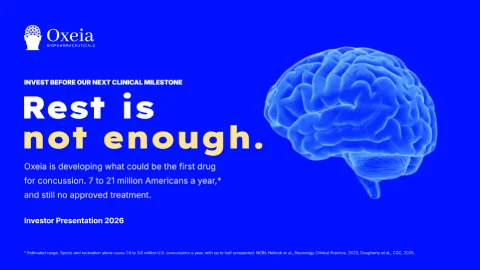
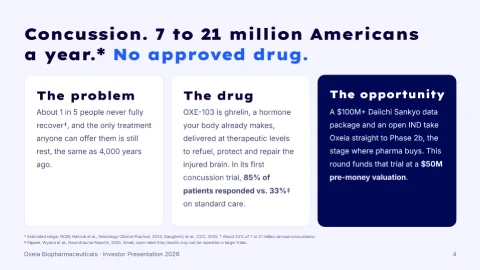
Concussion: Up to 21 million Americans a year.¹ No approved drug.
Oxeia is developing what could be the first drug for concussion. Our founder Amit Munshi led Arena Pharmaceuticals to a $6.7B* sale to Pfizer, and NFL veterans Alex Smith and Richard Sherman have joined the mission. Invest before our next clinical milestone.
85%
$7.9M+
14
$8.8B
A $400 Billion-a-Year Global Problem.² Still No Approved Drug.
That cost comes from medical care and lost earnings.
1 in 5
never recover

1.4 - 4.2M
Americans
About half
Yet the only prescription is still rest and wait, and for them, rest is not enough.

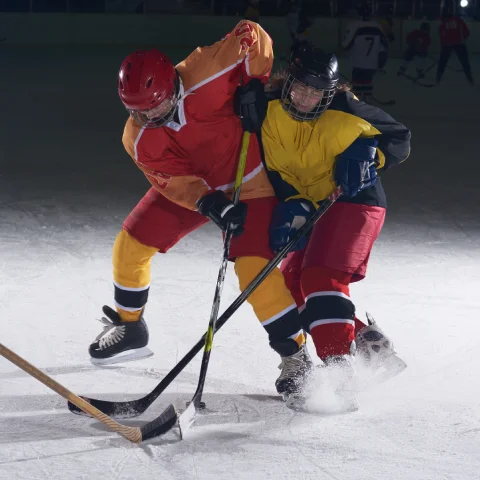
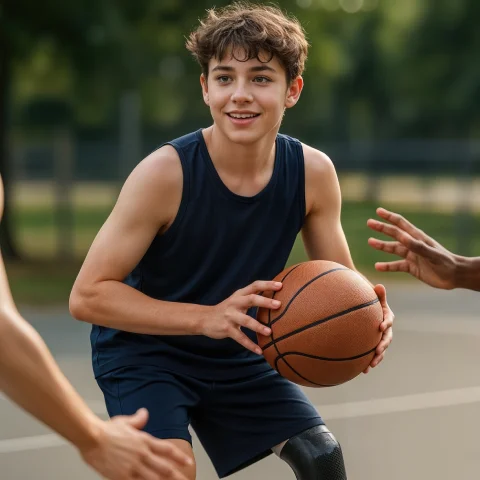
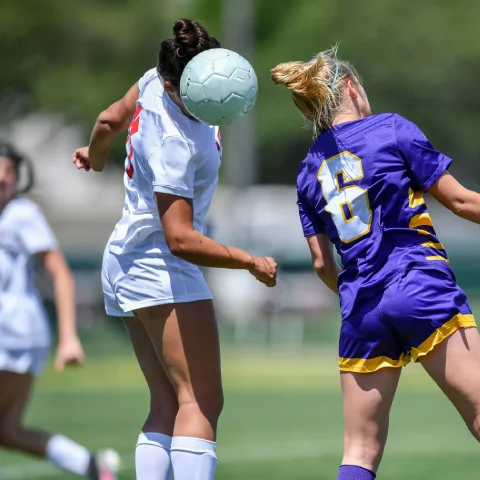
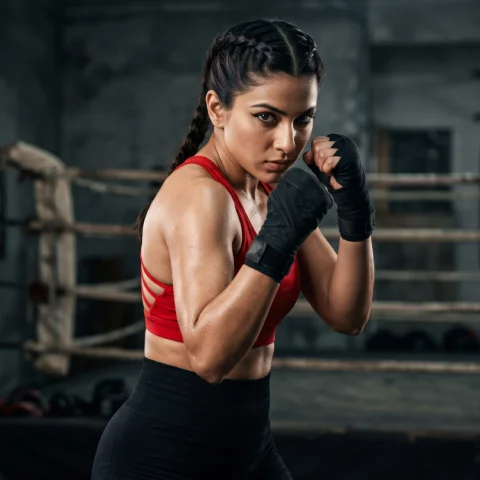
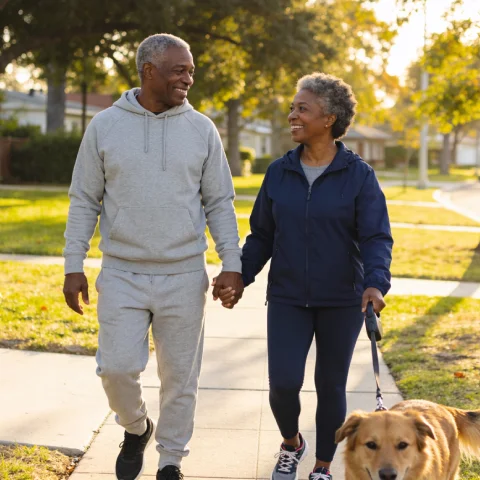
Who This Touches
Ghrelin: Bringing the Power of a Peptide Hormone to the Injured Brain
Oxeia is developing what could be the first drug for concussion. Its candidate, OXE-103, has already completed a Phase 2a human trial under an FDA-accepted IND. A concussion drains the brain's energy and sets off a cascade of damage, and OXE-103 is designed to stop it at the source, delivering high levels of the natural peptide hormone ghrelin to refuel, protect and repair the injured brain.
One peptide hormone, designed to refuel, protect and repair the injured brain at the same time.
How OXE-103 Works
OXE-103 is delivered at much higher concentrations than the body makes. In UC San Diego lab studies, that cut brain cell death by 80 to 90% and made lesions more than four times smaller.⁵
Crosses into the brain, where the damage is actually happening.
Acts on the whole cascade, not just one part of the damage.
Refuels, protects and repairs injured brain cells at the source.

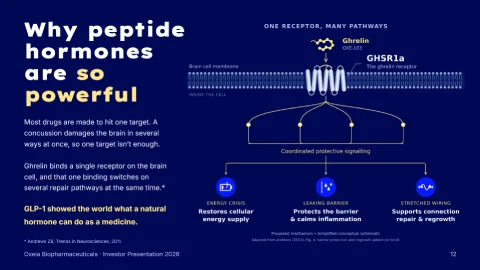
Why Peptide Hormones Are So Powerful
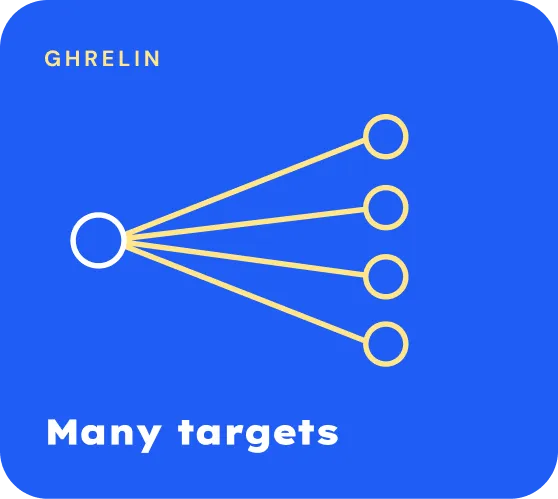
Most drugs, from small molecules to antibodies, are built to hit one target. But a concussion damages the brain in several ways at once, draining its energy, triggering inflammation, weakening the blood-brain barrier and damaging its wiring. Ghrelin is a peptide hormone, a small protein the body uses as a signal, and it hits multiple targets, so it can work on all of that damage together.6
OXE-103 Is on the Doorstep of Final-Stage Trials
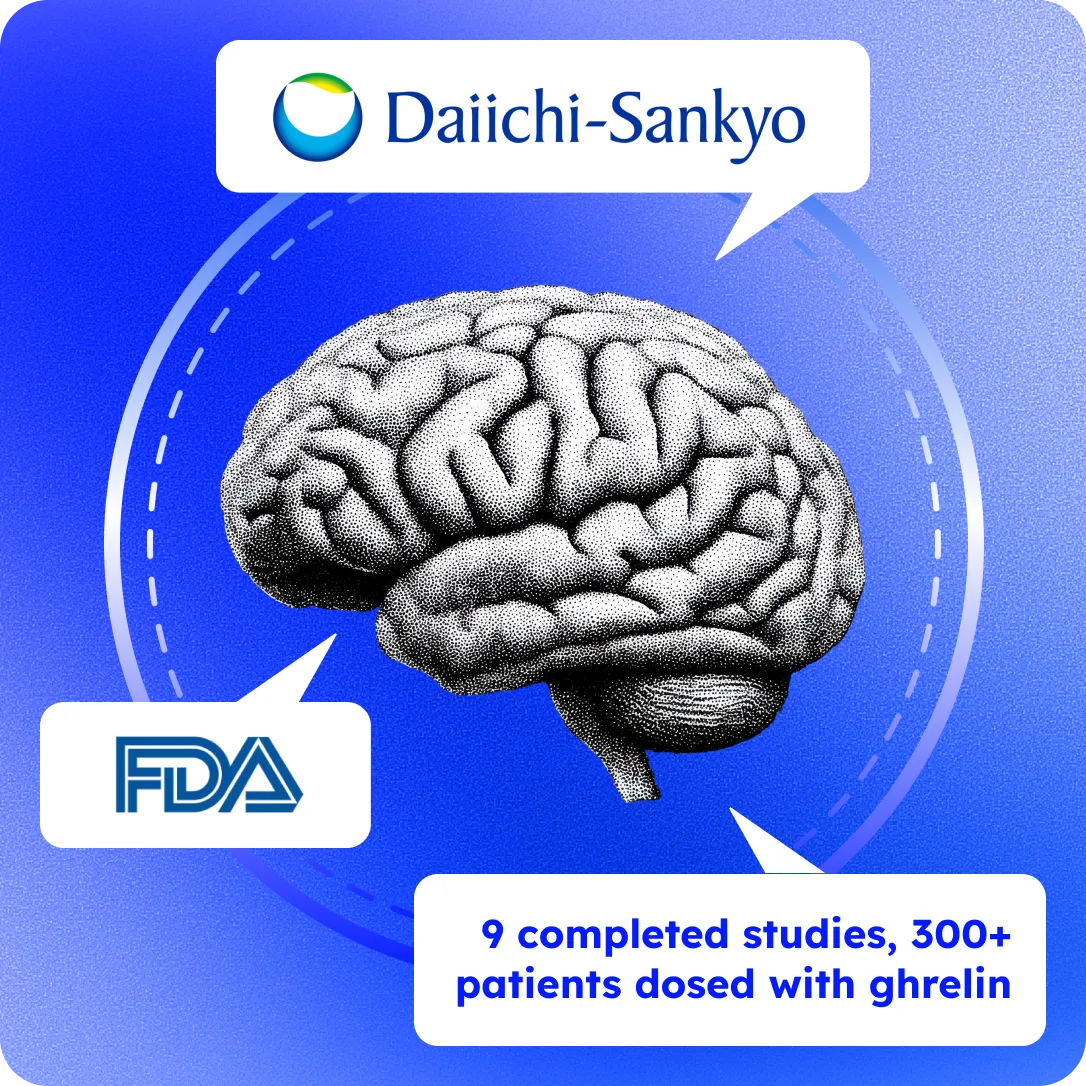
9 completed studies
300+ people dosed in safety studies
Backed by lab research
Zero to 60, years faster
Tested in concussion patients
Phase 2b is next
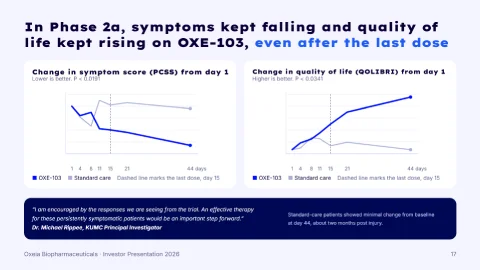
Patients on OXE-103 vs. Standard Care
Backed by lab research

Phase 2b is next
One Paper in 2012 Changed Everything
Dr. Vishal Bansal was a trauma surgeon at UC San Diego, sending concussion patients home with nothing but "rest." Then he read research showing ghrelin could help injured neurons recover. He spent the next decade turning that finding into OXE-103.

2027 Is a Defining Year for Oxeia
Phase 2 is also when drug companies most often buy.
A positive Phase 2b is the turning point, because it's the first larger, placebo-controlled proof that a drug works. Eli Lilly agreed to buy AtaiBeckley for up to $3.8B right after its positive Phase 2b in 2026.10
This round is priced at $50M pre-money, before Oxeia's Phase 2b begins.
Recent neurology acquisitions10
Total deal value, by stage of the lead drug.
2026
- Endpoint validation study.
2027
- Type C meeting with FDA.
- Finalize Phase 2b protocol.
- Phase 2b First-Patient enrolled Q2 2027.
2028
- Phase 2b Last Patient enrolled.
- Database lock.
- Phase 2b topline data available.
After Phase 2b
- Acquisition or IPO.
- If IPO, conduct Phase 3 pivotal studies.
- New Drug Application (NDA) for FDA approval.
Oxeia's goal is for a drug company to acquire OXE-103 once Phase 2b data supports it. These are forward-looking statements based on management's current plans. Timelines may change and no outcome, including any transaction, is assured.
Invest Before Oxeia's Next Big Milestone
Most early drug companies raise money just to reach human testing. Oxeia is past that. OXE-103 has a published trial in concussion patients and a $100M+ safety package from Daiichi Sankyo behind it, which puts it on the doorstep of final-stage trials. This round helps fund the next step, from finalizing the Phase 2b plan with the FDA to getting sites under contract and patients enrolled.
Priced before the next milestone
First to potentially measure concussion recovery
Big pharma is already interested
Brain drugs are in demand
Years ahead of a typical startup
The goal is an acquisition
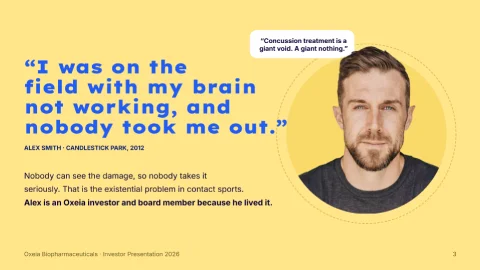
“I remember throwing kind of completely blind.”
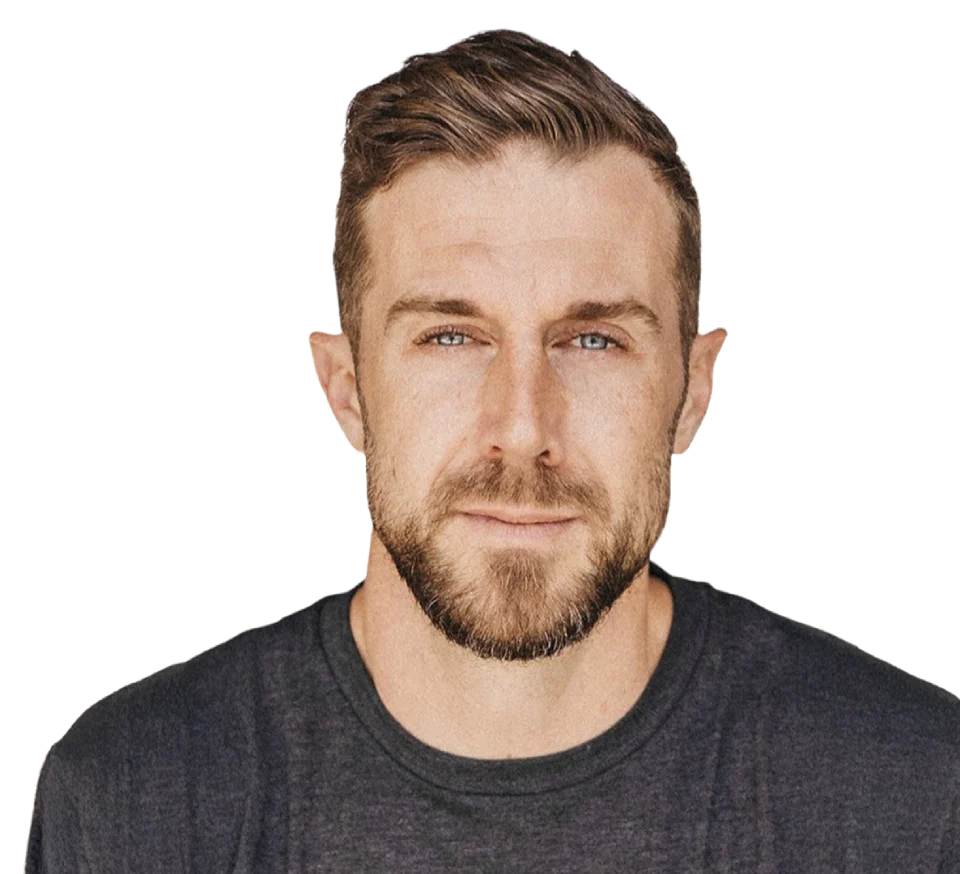
NFL Veterans Alex Smith & Richard Sherman Know This Injury Firsthand
Three-time Pro Bowl quarterback Alex Smith and five-time Pro Bowl cornerback and Super Bowl champion Richard Sherman both played through concussions. Alex is an Oxeia investor and board member, and Richard advises the company. They know what it means when the only treatment is rest.
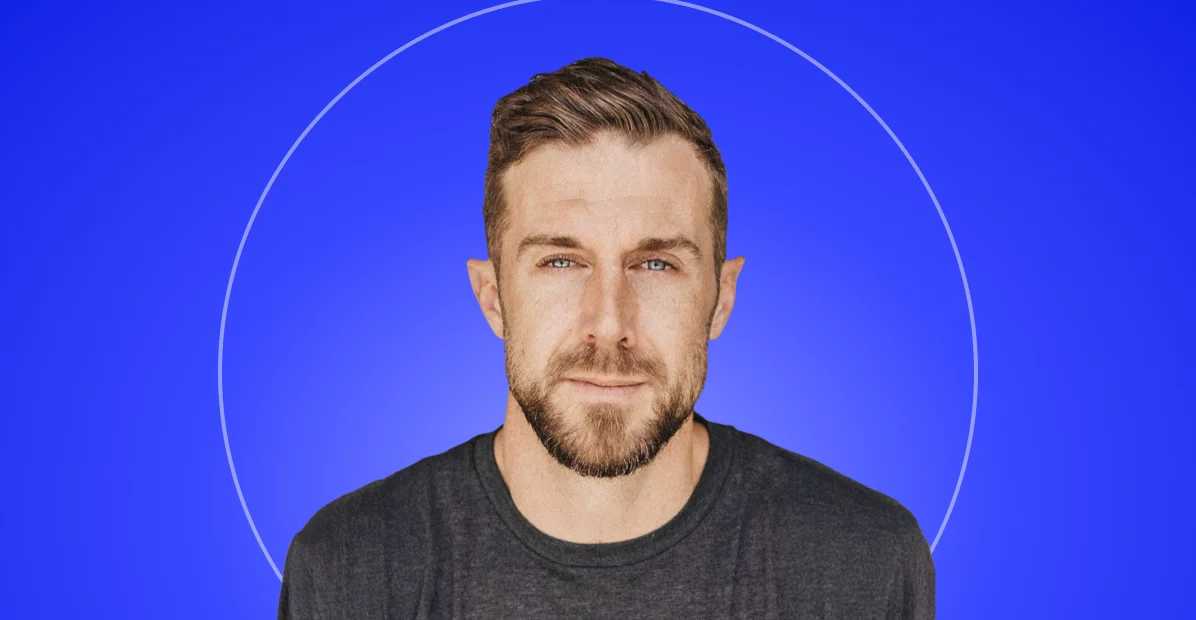
Alex Smith
At Candlestick Park in 2012, Alex took a hit and his vision blurred. "I remember throwing kind of completely blind," he says. "And somehow we scored." That touchdown was his last play as the 49ers' starter. His doctors told him what they still tell patients today, to rest and wait. "It's a giant void," he says, "a giant nothing."12
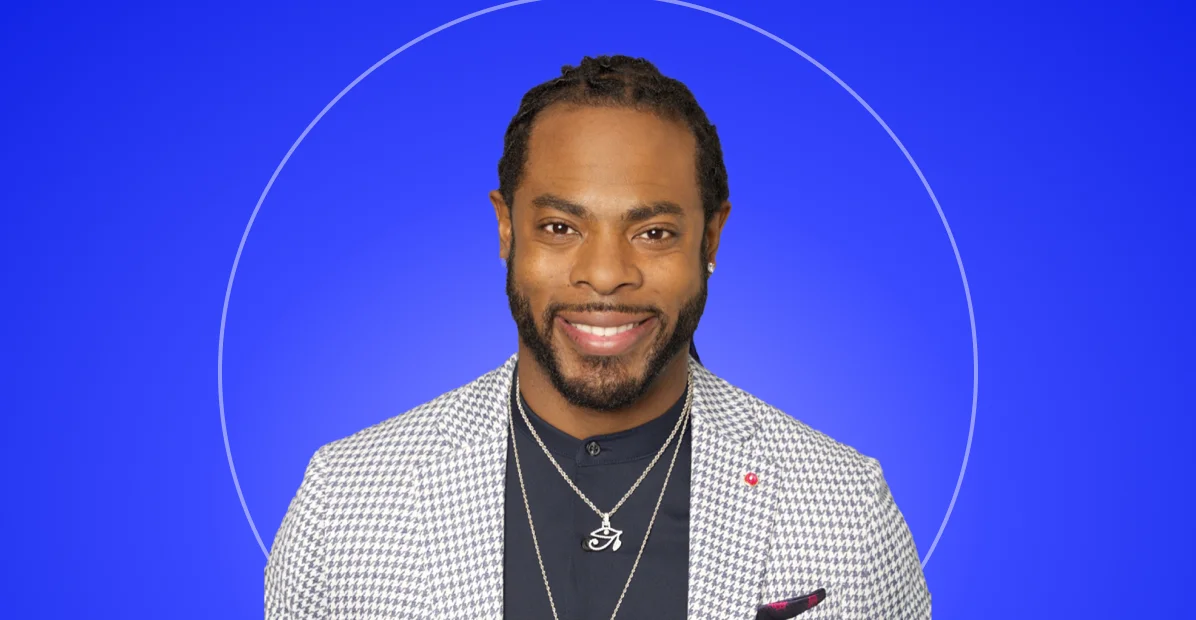
Richard Sherman
As a rookie in 2011, Richard took a hit to the head and couldn't see straight. He hid it from the team doctors, played two more quarters half-blind and made his first career interception. Years later, asked about the movie Concussion, he said, "I see a concussion movie every Sunday. Don't need to go to the theater."12
Built by a Team That's Done This Before
FOUNDERS, LEADERSHIP & BOARD
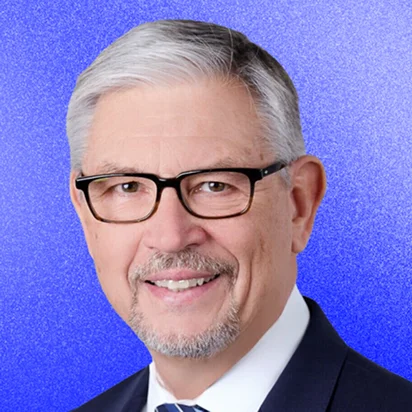
CEO
30 years guiding drugs through the FDA and positioning biotech companies for sale, including Prostvac through Phase 2 at Therion Biologics.
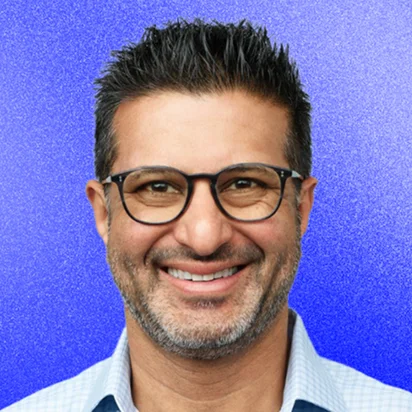
Founder
Led Arena Pharmaceuticals to its $6.7B sale to Pfizer; co-founded Kythera, later acquired by Allergan for $2.1B.
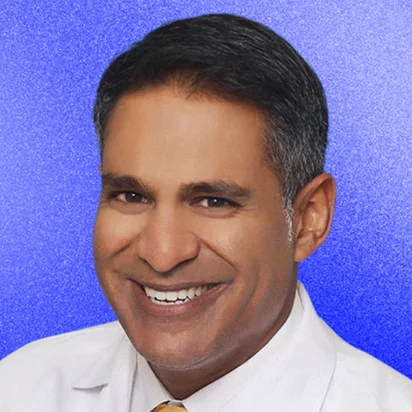
CSO & Founder
Inventor of OXE-103 and trauma surgeon at Scripps Mercy, whose UC San Diego research found ghrelin protects the injured brain.
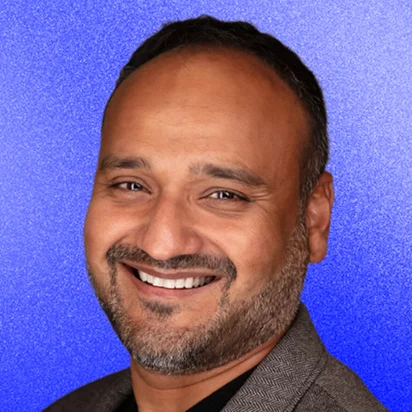
Director & Founder
Co-founded Oxeia and negotiated its access to Daiichi Sankyo's $100M+ data package; previously in strategy at Amgen.
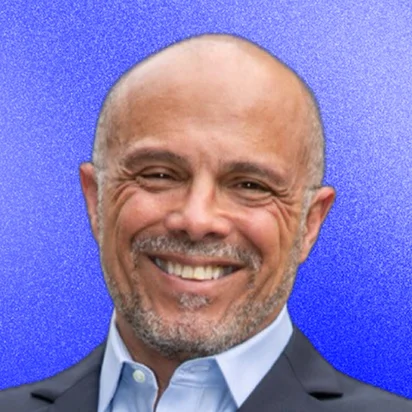
Board Director
Former CEO of Pulmatrix and Chief Commercial Officer at Option Care; launched products at Sunovion.
Advisors
CEO, Concussion & CTE Foundation
Former Harvard football player and WWE wrestler whose own concussions ended his career; co-founded Boston University's CTE Center.
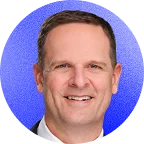
Chair of Neurosurgery, Duke
NIH-funded researcher whose work includes concussion, with 300+ published studies; former U.S. Air Force combat neurosurgeon deployed to Iraq.
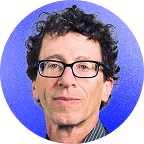
Professor of Psychiatry, UCSD
Leads Defense Department research on PTSD and brain injury in veterans and sits on an FDA drug advisory committee.
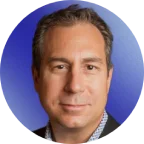
U.S. Navy Rear Admiral
Former Navy SEAL and Defense Joint Staff Officer who brings the military's view of brain injury to Oxeia.
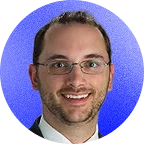
Phase 2a Lead Investigator, KU Medical Center
Medical Director of the University of Kansas Center for Concussion Management; led our Phase 2a.
Turn Your Investment into More Shares
Frequently Asked Questions
Why invest in startups?
Regulation CF allows investors to invest in startups and early-growth companies. This is different from helping a company raise money on Kickstarter; with Regulation CF Offerings, you aren't buying products or merchandise - you are buying a piece of a company and helping it grow.
How much can I invest?
Accredited investors can invest as much as they want. But if you are NOT an accredited investor, your investment limit depends on either your annual income or net worth, whichever is greater. If the number is less than $124,000, you can only invest 5% of it. If both are greater than $124,000, then your investment limit is 10%.
How do I calculate my net worth?
To calculate your net worth, just add up all of your assets and subtract all of your liabilities (excluding the value of the person's primary residence). The resulting sum is your net worth.
What are the tax implications of an equity crowdfunding investment?
We cannot give tax advice, and we encourage you to talk with your accountant or tax advisor before making an investment.
Who can invest in a Regulation CF Offering?
Individuals over 18 years of age can invest.
What do I need to know about early-stage investing? Are these investments risky?
There will always be some risk involved when investing in a startup or small business. And the earlier you get in, the more risk that is usually present. If a young company goes out of business, your ownership interest could lose all value. You may have limited voting power to direct the company due to dilution over time. You may also have to wait about five to seven years (if ever) for an exit via acquisition, IPO, etc.
Because early-stage companies are still in the process of perfecting their products, services, and business model, nothing is guaranteed. That's why startups should only be part of a more balanced, overall investment portfolio.
When will I get my investment back?
The Common Stock (the "Shares") of Oxeia Biopharmaceutical (the "Company") are not publicly-traded. As a result, the shares cannot be easily traded or sold. As an investor in a private company, you typically look to receive a return on your investment under the following scenarios:
- The Company gets acquired by another company.
- The Company goes public (makes an initial public offering).
In those instances, you receive your pro-rata share of the distributions that occur, in the case of acquisition, or you can sell your shares on an exchange. These are both considered long-term exits, taking approximately 5-10 years (and often longer) to see the possibility for an exit. It can sometimes take years to build companies. Sometimes there will not be any return, as a result of business failure.
Can I sell my shares?
Shares sold via Regulation Crowdfunding offerings have a one-year lockup period before those shares can be sold under certain conditions.
Exceptions to limitations on selling shares during the one-year lockup period
In the event of death, divorce, or similar circumstance, shares can be transferred to:
- The company that issued the securities
- An accredited investor
- A family member (child, stepchild, grandchild, parent, stepparent, grandparent, spouse or equivalent, sibling, mother-in-law, father-in-law, son-in-law, daughter-in-law, brother-in-law, or sister-in-law, including adoptive relationships)
What happens if a company does not reach its funding target?
If a company does not reach its minimum funding target, all funds will be returned to the investors after the close of the offering.
How can I learn more about a company's offering?
All available disclosure information can be found on the offering pages for our Regulation Crowdfunding offering.
What if I change my mind about investing?
You can cancel your investment at any time, for any reason, until 48 hours prior to a closing occurring. If you've already funded your investment and your funds are in escrow, your funds will be promptly refunded to you upon cancellation. To submit a request to cancel your investment please email: investors@dealmakersecurities.com
How do I keep up with how the company is doing?
At a minimum, the company will be filing with the SEC and posting on its website an annual report, along with certified financial statements. Those should be available 120 days after the fiscal year end. If the company meets a reporting exception, or eventually has to file more reported information to the SEC, the reporting described above may end. If these reports end, you may not continually have current financial information about the company.
What relationship does the company have with DealMaker Securities?
Once an offering ends, the company may continue its relationship with DealMaker Securities for additional offerings in the future. DealMaker Securities' affiliates may also provide ongoing services to the company. There is no guarantee any services will continue after the offering ends.
What is Oxeia Biopharmaceutical's pre-money valuation?
Oxeia Biopharmaceutical's pre-money valuation is $50M. The valuation was calculated by multiplying the total number of shares outstanding (TSO) by the price per share offered in this raise. This is a pre-money valuation, meaning it reflects the company's value before any new funds raised in this offering are added.
Join the Discussion
Rest is not enough.